Roman era
Two thousand years of bathing
A bathing settlement grew around these springs in Roman times, on the right bank of the Vrbas, while an important road ran along the left bank. During construction work on the spa complex in the 1970s, around 600 Roman copper coins were found here - what remains of the old custom of throwing a coin into a spring for health and good fortune. The oldest finds show that coins were being tossed into this water as early as the second century.

Ottoman and Austro-Hungarian period
Stone baths above the river
Over the centuries stone bathhouses were built around the springs, one of them carved directly into the rock. They were used through every period of the town, rebuilt and extended as the settlement grew, and the water never stopped flowing. The old bath complex is protected today as a monument, and some of the buildings still stand exactly where bathers have been coming for hundreds of years.

Today
The beach where warm meets cold
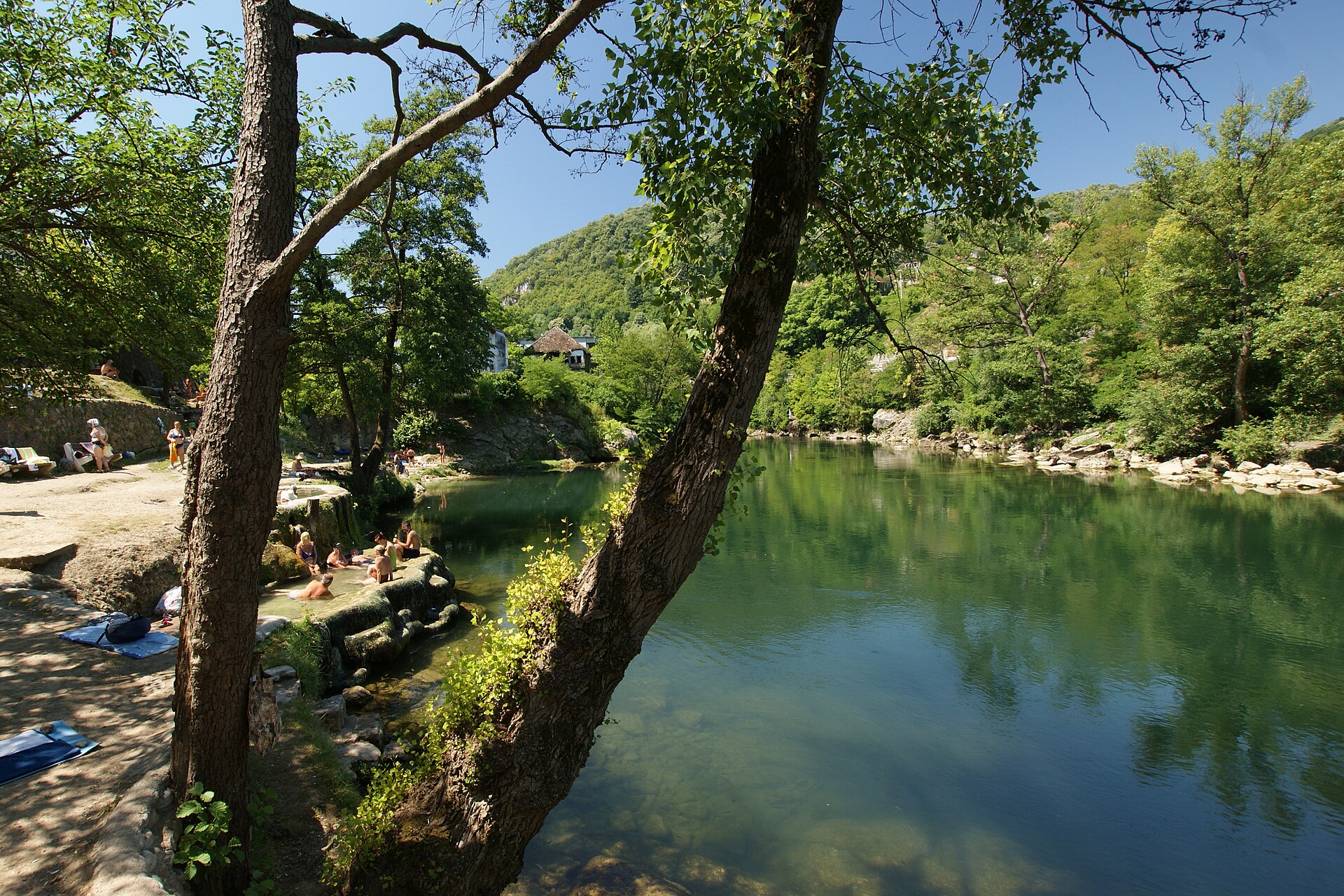
This is the part people come back for. Several springs flow freely into the river at Vrucica beach, where you can bathe outdoors, free of charge, all year round. Sit where the warm water enters the Vrbas and you get both at once: heat on one side, cold current on the other. It is at its best on a cold, bright morning, when steam rises off the surface. A few steps away is the indoor complex with pools, saunas, salt rooms and massage.
The old bathhouses
Direklija
Carved into the rock itself. According to local tradition it has been in use since Roman times.
The Queen's Bath
Also known as Trokica spring. Legend has it this was where the ladies of the town bathed.
Vrucica beach
Where the springs meet the river. Free, open all year, and busiest on cold sunny mornings when steam rises off the water.
Terme Banja Luka
The modern complex: indoor and outdoor pools, saunas, salt rooms, hydromassage and treatment areas.
What the water is good for
Thermomineral water of this kind has been used here for centuries for bathing, relaxation and recovery. It is traditionally associated with easing joint and muscle problems, recovery after injury and general relaxation - which is why a rehabilitation institute has been based in this neighbourhood for decades.
This is general information, not medical advice. If you have a health condition, ask your doctor before longer thermal bathing.
The route from the villa
One road, one direction: follow the Vrbas downstream from the villa and you are there in about ten minutes by car. It is also a pleasant ride by bike, with the river on your side the whole way, and a walk of roughly two hours for anyone who wants to make a day of it. Park by the river and walk down to the water. Bring a towel and slippers - the open-air spots have no facilities - and come early or late if you want it quiet.
Sources: Tourism Organisation of Banja Luka, Wikipedia, heritage records.